
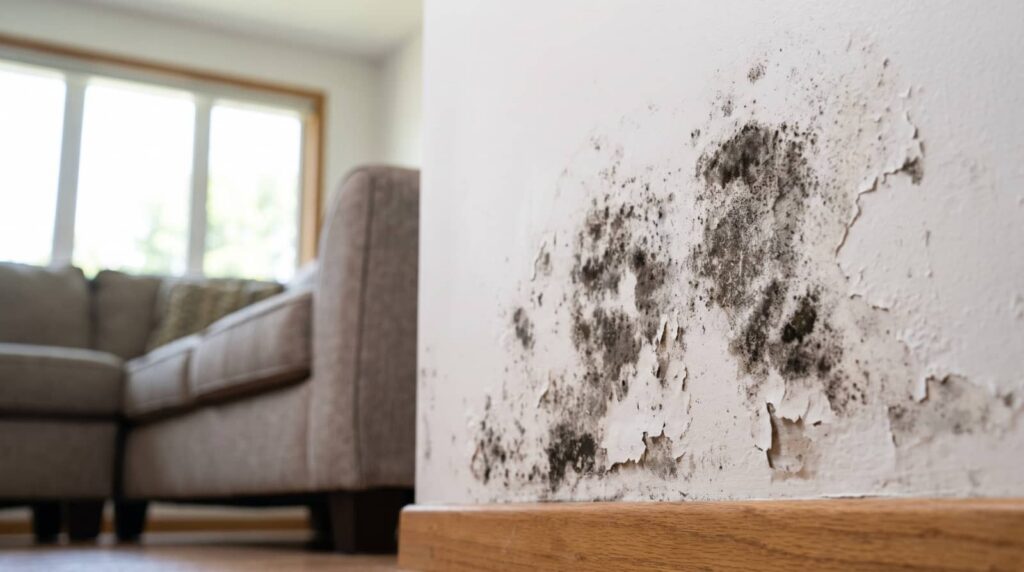
After a pipe burst, you might think the damage stops when the water does, but mold can start growing within 24 to 48 hours. You need to act fast because wet drywall, carpet, and insulation trap moisture and let spores spread out of sight. If you catch the problem early, you can limit repairs, reduce health risks, and avoid hidden damage that’s harder to fix than it first appears.
Key Takeaways
- Mold can begin growing within 24 to 48 hours after water damage, especially on wet porous materials.
- Fast drying, water removal, and dehumidification help stop mold before it spreads into hidden areas.
- Moisture often stays trapped in walls, insulation, and flooring, allowing mold to grow unseen.
- Musty odors, staining, peeling paint, and warped surfaces can signal mold after a leak or flood.
- Professional inspection and remediation are important when damage is widespread or hidden moisture remains.
How Mold Starts After Water Damage
Mold can start in as little as 24 to 48 hours after water damage if moisture remains in walls, floors, or other porous materials.
You create the conditions for mold after water damage when absorbed water lingers in drywall, carpet, insulation, or wood. Spores are already present in most indoor spaces, and they begin growing when humidity, warmth, and organic material align.
You may not see contamination right away because growth often starts behind surfaces, inside cavities, or under flooring. If you act quickly, you can limit expansion and protect your space.
Professional drying, moisture checks, and targeted inspection help you identify hidden risk before it spreads. You’re not alone; prompt, informed action keeps your home safer and your recovery more manageable.
Why the First 24–48 Hours Matter
Within the first 24–48 hours, mold can begin to grow on wet materials, especially if you don’t dry them fast.
Water also wicks into hidden spaces like wall cavities, insulation, and subflooring, where you may not see the damage right away.
Acting quickly helps you limit spread and decide when professional drying, inspection, or remediation’s needed.
Mold Growth Starts Quickly
Once water sits in porous materials, mold can begin developing fast, so the first 24 to 48 hours matter a lot.
You’re dealing with a biological process that accelerates when warmth, moisture, and organic material stay in place. Spores already in the environment can settle, germinate, and form visible colonies before you expect it.
That’s why prompt drying and cleanup give you the best chance to stop growth early. If you act quickly, you protect your home and reduce the chance of lingering odors, staining, and health concerns.
You’re not alone in this; many property owners face the same issue after leaks or flooding. Fast response helps you stay ahead of damage and keeps the space safer for everyone who lives there.
Moisture Penetrates Hidden Areas
Even when surfaces look dry, water can move into wall cavities, under flooring, insulation, and other hidden spaces, where it’s harder to see and remove.
In the first 24–48 hours, that trapped moisture keeps feeding mold and can weaken materials before you notice a problem. You may feel relieved when the visible puddle is gone, but your home can still hold damp pockets inside framing, trim, and subfloors.
That’s why fast drying matters: you need targeted airflow, dehumidification, and moisture checks, not just wiping. If you act early, you protect your space and the people in it.
If you wait, hidden areas can become a shared source of odor, damage, and contamination, making cleanup more complex.
Why Mold Grows So Fast in Wet Materials
Wet materials absorb moisture quickly, creating the damp conditions mold needs to start growing fast.
You may not see it right away because mold often spreads inside drywall, insulation, and subflooring before it appears on the surface.
That’s why fast drying and inspection can help you limit hidden growth after water damage.
Rapid Moisture Absorption
When water enters drywall, wood, carpet, or insulation, these materials absorb it fast and hold it close to the surface, giving mold the moisture it needs to start growing.
You’re dealing with porous building materials that wick water through tiny channels, so wet areas can stay damp long after the spill looks gone. That trapped moisture keeps relative humidity high at the material surface, which supports spore germination and early colonization.
If you act quickly, you can cut off that fuel source before mold gets established. Professional drying targets both visible wetness and absorbed moisture, using airflow, dehumidification, and moisture checks.
When you respond early, you protect your space, reduce risk, and stay part of a healthier home environment together.
Hidden Material Growth
Moisture doesn’t just sit on the surface; it moves into the material where you can’t always see it. Once inside drywall, insulation, carpet pad, or wood, it creates a damp, protected zone where mold can start fast.
You may dry what you see, yet hidden layers can stay wet and feed growth for days. Warm temperatures, trapped humidity, and porous surfaces let spores germinate quickly, especially when airflow is weak.
That’s why you might notice odors, stains, or soft spots before visible colonies appear. If you belong to a home or team affected by water damage, act as one: inspect behind finishes, dry thoroughly, and bring in pros when needed.
Fast, complete drying helps you protect your space and stop mold early.
Signs of Mold After Water Damage
Mold often shows up after water damage as a musty odor, visible discoloration, or fuzzy growth on walls, ceilings, baseboards, and other damp materials.
You may also notice staining that spreads, peeling paint, warped surfaces, or a slimy film on wet finishes. If the air feels heavier or you start sneezing, coughing, or getting watery eyes indoors, treat those changes as warning signs.
You’re not overreacting; mold can begin growing within 24 to 48 hours when moisture lingers.
Check for dampness after leaks, floods, or condensation, and act fast if materials stay wet. Quick drying and inspection help protect your space and keep your home feeling safe, clean, and comfortable.
Where Mold Hides After Water Damage
Even if you spot obvious staining or odor, hidden mold often forms in places you can’t easily see. You should check behind baseboards, under flooring, inside wall cavities, and around insulation where moisture lingers.
Mold also grows beneath cabinets, in ceiling materials, around window frames, and inside HVAC components after leaks or flooding. If water reached porous items like drywall, carpet pad, or wood framing, spores can colonize deep within those layers.
You may also find growth in closets, crawlspaces, and utility areas where airflow stays limited. Because mold can spread before you notice surface damage, you’re not alone if the source feels hard to trace.
A careful inspection helps your team identify hidden contamination and protect your home from further damage.
Drying Steps That Help Stop Mold
Fast drying is one of the most effective ways to limit mold after water damage. You should remove standing water first, then open wet materials to speed evaporation.
Use fans to move air across damp surfaces, and run a dehumidifier to pull moisture from the room. Keep indoor humidity below 60% if you can.
Lift rugs, separate furniture, and pull back baseboards or padding so hidden moisture doesn’t linger. Replace soaked insulation, drywall, or carpet that can’t dry quickly.
Check corners, closets, and under sinks, because trapped dampness can persist there. Stay consistent for several days, and measure progress with a moisture meter if you have one.
When you dry the space thoroughly, you give your home the best chance to stay safe and recover well.
Health Risks of Waiting Too Long
If you wait too long after water damage, mold can start affecting indoor air quality and create health concerns, especially for people with asthma, allergies, or weakened immune systems.
You may notice coughing, sneezing, watery eyes, headaches, or throat irritation as spores spread through your space. Damp materials also release microbial particles and odors that can make rooms feel uncomfortable and hard to relax in.
The longer moisture stays, the more likely mold is to colonize hidden areas and keep irritating you day after day. Quick drying and cleanup help reduce exposure and support a healthier home for everyone there.
When You Need a Mold Inspection
You need a mold inspection when water damage has soaked porous materials, stayed wet for more than 24 to 48 hours, or left behind a musty odor that doesn’t go away after drying.
You should also schedule one if you see discoloration, bubbling paint, warped trim, or recurring damp spots. An inspector can check hidden areas behind walls, under flooring, and inside HVAC returns where moisture lingers.
You’ll get a clearer picture of whether growth is active, limited, or already spreading. That helps you make smart next steps without guesswork.
If you’re part of a home or business team, getting inspected quickly protects everyone’s space and keeps cleanup focused. Fast, accurate assessment gives you confidence and keeps your recovery moving forward.
Why Professional Remediation May Be Needed
Professional remediation may be needed when mold has spread beyond a small, visible area or water has soaked into drywall, insulation, subflooring, or HVAC components.
You can’t always dry these materials fully with household tools, and hidden moisture often keeps mold active.
A trained team uses moisture meters, containment, HEPA filtration, and controlled removal to protect clean areas and reduce spore spread.
They also inspect for structural damage, sanitize affected surfaces, and verify that humidity and moisture levels are back in range.
When you bring in professionals, you’re not overreacting; you’re choosing a proven process that helps your home and your people recover safely.
Fast, targeted remediation can save materials, limit health risks, and restore confidence in your space.
Frequently Asked Questions
Can Mold Grow Behind Walls Without Visible Water Stains?
Yes, you can have mold behind walls even without stains if hidden leaks or humidity keep materials damp. You’ll want professional moisture checks and remediation, because early detection protects your home and community.
Does Insurance Usually Cover Mold From Water Damage?
Usually, yes, if the water damage was sudden—many claims are covered—but your policy often excludes gradual leaks. You’ll need quick documentation, prompt drying, and sometimes professional remediation to qualify.
Should I Throw Away Wet Carpet After Flooding?
Yes, you should toss wet carpet after flooding if it’s been contaminated or soaked over 24-48 hours. You’ll lower mold risk by acting fast, and a professional can inspect hidden damage.
Can Bleach Remove Mold From Porous Materials?
No, you can’t reliably remove mold from porous materials with bleach. It won’t penetrate deeply, so you should discard or professionally remediate them. Better safe than sorry—you’ll protect your home and your people.
How Long Does Professional Mold Remediation Usually Take?
Professional mold remediation usually takes 1–5 days, though bigger jobs can take longer. You’ll get inspection, containment, drying, removal, and verification, so your space feels safe and your team knows it’s handled.
Conclusion
When water damage hits, you need to act fast—mold can move in like an uninvited guest within 24 to 48 hours. Dry the area, remove wet materials, and keep air moving with fans and dehumidifiers. If you notice odors, staining, or hidden moisture, don’t wait. Quick action helps you limit damage, protect your health, and avoid bigger repairs. When the problem seems too large, call a mold professional right away.