
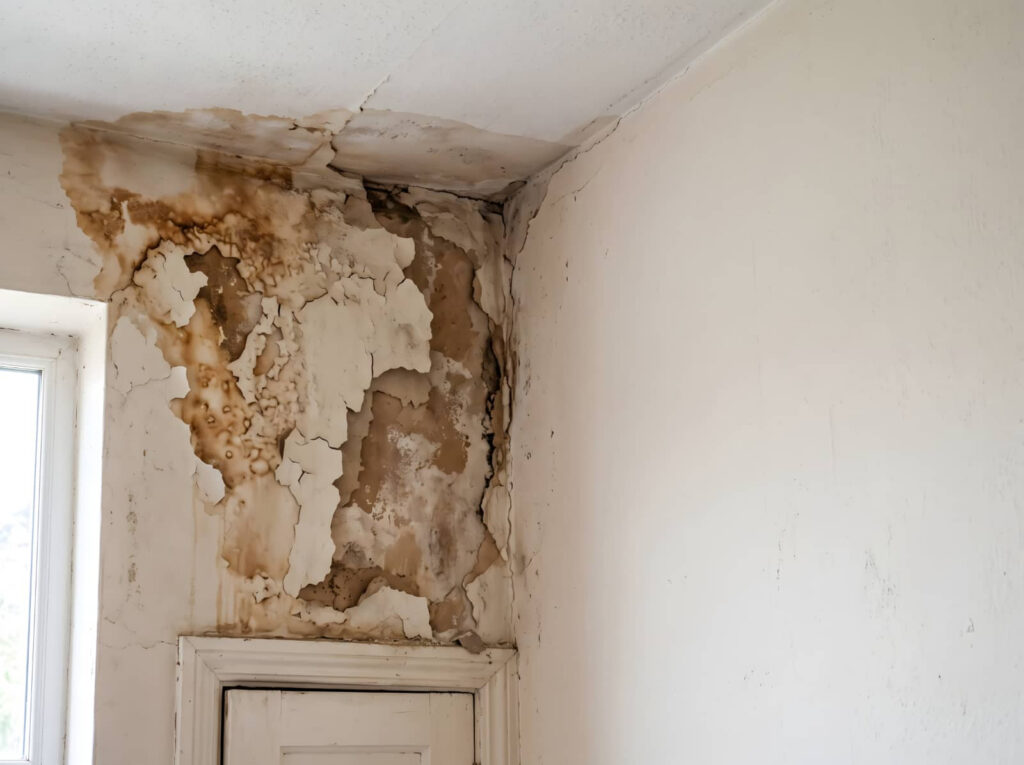
Like a wall that whispers before it fails, water-damaged drywall gives you clues you can’t ignore. You’ll see stains, swelling, soft spots, or crumbling seams, and each one signals a different level of damage. Some panels dry out and recover, but others need replacement once moisture weakens the gypsum core or mold risk rises. Before you patch anything, you must stop the leak and assess what’s hidden behind the surface.
Key Takeaways
- Water-damaged drywall often shows stains, swelling, soft spots, peeling paper, or visible warping near leaks or ceilings.
- If drywall feels mushy, crumbles, or keeps discoloring after drying, it usually needs repair or replacement.
- Dry firm drywall by stopping the leak, improving airflow, and using fans or dehumidifiers to remove moisture.
- Inspect joints, fastener heads, baseboards, windows, and ceilings for hidden damage and spreading stains.
- Prevent future damage by fixing moisture sources quickly and keeping indoor humidity below 50%.
What Water Damage Looks Like in Drywall
Water damage in drywall often shows up as staining, discoloration, swelling, soft spots, or visible warping, and you may also notice moisture behind the wall surface.
You can spot these changes around leaks, plumbing penetrations, windows, or ceilings where water has migrated into the gypsum core.
The paper facing may darken, peel, or bubble, while seams can telegraph through as the board loses structural integrity.
If you see these signs, you’re not dealing with cosmetic wear alone; the panel may need water damaged drywall repair to restore safe, stable performance.
Acting quickly helps you protect your space and stay part of a well-maintained home environment.
Careful inspection lets you identify affected areas before deterioration spreads, supporting a clean, durable finish.
Check for Soft Spots, Stains, and Swelling
Run your hand over the drywall and inspect the surface for soft spots, stains, and swelling. Press lightly but firmly; sound drywall should feel rigid and uniform, not spongy, crumbly, or bowed.
Look for discoloration, rust-tinted marks, and yellow or brown stains that trace moisture paths. Swelling at joints, seams, or fastener heads usually means the gypsum core has absorbed water and expanded.
Check edges near baseboards, windows, and ceilings, where hidden leakage often shows first. If the surface flexes, flakes, or shows visible distortion, treat it as compromised material.
You need a clean, honest assessment now, because precise detection helps your crew make the right repair call and keeps your walls in the same strong, dependable condition your home deserves.
When You Can Dry and Save Drywall
If the drywall still feels firm, the stain is limited, and the leak has already stopped, you may be able to dry it and keep it in place.
You should open the area fast, move air across the surface, and lower humidity so moisture leaves the paper facing and gypsum core. Use fans, a dehumidifier, and gentle heat; don’t trap dampness behind furniture or curtains.
You’re in a good position to save the wall when the surface returns to normal texture and no new discoloration appears.
- Aim airflow at both sides, if accessible.
- Check the baseboard and seams daily.
- Keep indoor humidity near 50%.
- Test the area for cool, damp spots.
- Confirm the stain stays flat and stable.
When Water Damaged Drywall Needs Repair
Once drywall shows swelling, softness, crumbling, or spreading stains, you need repair rather than simple drying. You’re looking at structural breakdown, not just surface moisture, and the panel won’t reliably recover.
If the paper face blisters, the core turns mushy, or edges cave in when you press them, replacement or patching is the correct call. You should also repair drywall when discoloration keeps expanding after the surface feels dry, because hidden damage can remain inside the board.
In finished rooms, failed drywall can weaken seams, invite mold growth, and leave your space looking neglected. Acting promptly keeps your walls sound and your home comfortable.
When you recognize these signs, you’re making the same practical choice other careful homeowners make: fix the damage before it spreads.
Stop the Leak Before You Repair
Before you patch or replace damaged drywall, you need to stop the water source completely. Inspect the area above, below, and behind the stain so you can trace the leak to its origin. Shut off the supply valve, clear clogged drains, or seal failed flashing as needed.
If moisture keeps entering, your repair won’t hold and hidden deterioration can spread.
- Check for active dripping after rain.
- Feel nearby surfaces for dampness.
- Watch for discolored fasteners or trim.
- Test plumbing fixtures for pressure loss.
- Confirm the wall stays dry for 24 hours.
You’re not just fixing a wall; you’re protecting your space and everyone in it. Once the source is controlled, you can move forward with confidence.
How to Replace Water Damaged Drywall
To replace water damaged drywall, cut out every compromised section back to clean, solid material. Then install new drywall that matches the existing thickness and framing layout.
You should trace the damage, mark straight repair lines, and use a utility knife or drywall saw for clean edges. Remove insulation only if it’s wet or degraded.
Fit the replacement panel snugly, fasten it to studs with drywall screws, and keep screw heads just below the surface.
Tape the seams, apply joint compound in thin coats, and feather each pass wider than the last. Let each coat dry completely, then sand smooth.
Prime the repair before painting so the finished wall blends cleanly with the surrounding surface and feels like it belongs.
Prevent Future Drywall Water Damage
Prevent future drywall water damage by fixing the source of moisture as soon as you find it, whether that means repairing a leaking pipe, resealing a roof penetration, clearing a clogged gutter, or correcting a grading problem that sends water toward the foundation.
You should inspect bathrooms, kitchens, attics, and basements regularly, because small leaks spread fast. Keep indoor humidity below 60% with exhaust fans and dehumidifiers. Seal gaps around windows, tubs, and utility penetrations with the right caulk or foam. Maintain flashing, gutters, and downspouts so runoff exits safely.
- Check plumbing joints quarterly
- Repaint damaged areas with moisture-resistant coatings
- Test attic ventilation each season
- Watch for musty odors after storms
- Keep friends and family alert to early warning signs
Frequently Asked Questions
How Long Does Drywall Take to Dry After a Leak?
Drywall usually takes 24 to 72 hours to dry after a leak, but you should verify moisture levels with a meter; hidden saturation can linger longer, especially in insulation, slow airflow, or humid conditions.
Can Mold Grow Inside Drywall After Water Exposure?
Yes, mold can grow inside drywall after water exposure; where moisture lingers, spores thrive. You’ll protect your home community by drying materials fast, removing damaged sections, and checking hidden cavities promptly.
What Tools Do I Need for Drywall Water Damage Repair?
You’ll need a utility knife, drywall saw, drill, screws, joint compound, tape, sanding block, putty knife, moisture meter, primer, and protective gear. Use them to cut out damage, secure patches, and restore clean, solid walls.
Should I Replace Insulation After Drywall Gets Wet?
Yes—you should replace wet insulation, because it can trap moisture and harbor mold. You’ll protect your walls and home; mold can begin within 24–48 hours, so you must act quickly.
Does Homeowners Insurance Cover Water Damaged Drywall Repair?
Yes, your homeowners policy usually covers drywall repair from sudden, accidental water damage, like a burst pipe, but not gradual leaks or flooding. You should review exclusions, document damage, and contact your insurer promptly.
Recap
If you’ve spotted stains, swelling, or soft spots, you can test a common theory: minor drying may save drywall, but only if the damage is shallow and the leak is fixed. In practice, once the paper face delaminates or the core turns mushy, you need repair or replacement. Don’t guess. Confirm the moisture source, dry the area fully, and replace compromised sections before mold, rot, and structural damage spread.