
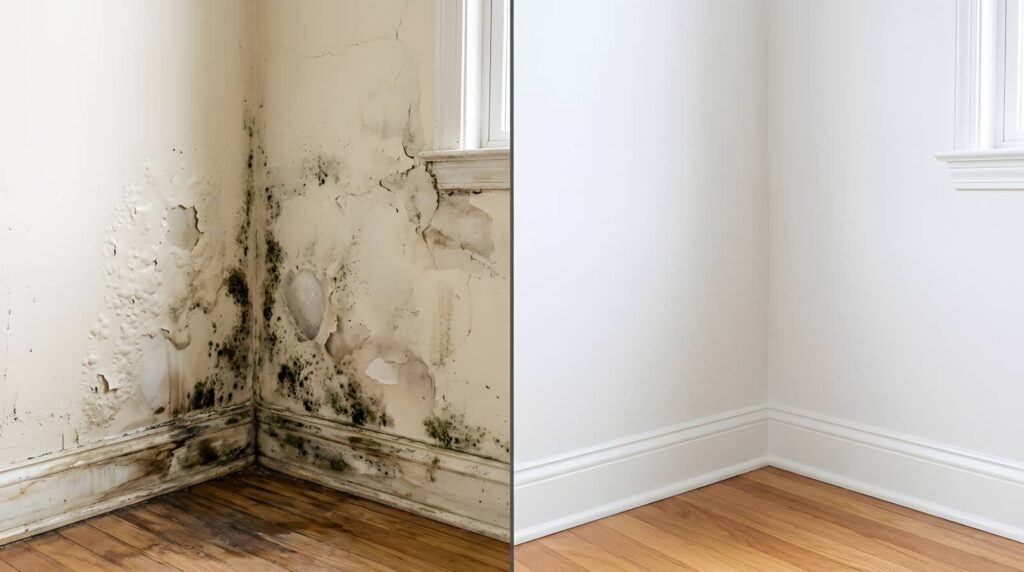
A hidden stain can be the tip of a much larger problem beneath the surface. You should call a mold remediation company when you see visible mold, smell persistent musty odors, or notice water damage from leaks or condensation. If your home triggers congestion, fatigue, or similar symptoms, mold may be involved. Professional remediation can stop growth before it spreads, but the real risk often starts where you can’t easily see it.
Key Takeaways
- Call a mold remediation company when you see visible mold or smell persistent musty odors.
- Call professionals after leaks, flooding, or recurring condensation that may have hidden mold growth.
- Seek help if unexplained symptoms like coughing, congestion, rashes, or headaches worsen at home.
- Hire experts for widespread mold, hidden contamination, or mold inside walls, insulation, or HVAC systems.
- Use remediation services when containment, safe removal, moisture control, and post-cleanup testing are needed.
When to Call a Mold Remediation Pro
You should call a mold remediation pro as soon as you notice visible mold, persistent musty odors, or signs of moisture damage, since these issues often indicate hidden growth that can spread quickly.
You should also act after leaks, flooding, or recurring condensation, because damp materials can support active colonies behind walls, under flooring, and in insulation.
When to call a mold remediation company depends on the extent of contamination, but you shouldn’t wait for the problem to get worse.
A qualified team can inspect affected areas, identify moisture sources, and apply containment, filtration, and safe removal methods.
Visible Mold You Shouldn’t Clean Yourself
If you see widespread surface growth, you shouldn’t clean it yourself because the affected area may be larger than it appears.
Visible mold often signals hidden contamination inside wall cavities, insulation, or HVAC components.
A remediation company can assess the source and contain the hazard, reducing your exposure to spores and other safety risks.
Widespread Surface Growth
Widespread visible mold on walls, ceilings, flooring, or other surfaces usually calls for professional remediation rather than DIY cleanup. You’re dealing with a larger colony that can release spores when disturbed, so cleanup needs containment, filtration, and controlled removal.
A mold remediation company can assess the spread, protect adjacent areas, and help you return the space to normal with less risk and disruption.
- Dark patches spreading across drywall
- Fuzzy growth tracing baseboards
- Stained ceiling panels with active colonies
- Flooring edges lifting beside visible mold
When you see this level of growth, you’re not overreacting—you’re taking a practical step to protect your home and the people in it.
Professional response gives you a clear plan, better results, and peace of mind.
Hidden Contamination
Visible mold isn’t always straightforward, especially when it shows up near signs of trapped moisture or damage behind a surface. You may see a small patch, but the source can extend into drywall, insulation, or framing.
That means the visible growth is often only the surface symptom of a larger contamination issue. A mold remediation company can inspect the area, identify moisture pathways, and determine whether the material has been affected beyond what you can see.
You’ll also get a clear plan for containment, removal, and drying that matches the condition in your space. If the spot returns after cleaning, or if nearby materials feel soft, warped, or stained, you need professional evaluation.
Acting early helps you protect your property and stay aligned with your home’s standards.
Safety Risks Avoidance
When mold appears in areas that are hard to access or that may expose you to spores, contaminated dust, or hidden moisture, you shouldn’t try to clean it yourself.
You protect your health and your space by calling trained remediation specialists who use containment, filtration, and proper removal methods. You also lower the chance of spreading contamination through your home and creating a bigger repair bill.
- A damp attic corner with dark growth on insulation
- A basement wall streaked with mildew after flooding
- A behind-cabinet leak with swollen drywall and odor
- A ceiling stain around a bathroom vent
If you feel unsure, trust that you’re not overreacting.
A professional team can assess the source, stabilize the area, and help you restore a safer indoor environment for everyone who lives there.
Musty Odors That Point to Hidden Mold
If you notice a persistent musty odor, you may have hidden mold behind walls, under flooring, or inside HVAC components.
You should inspect for odor concentration near moisture-damaged areas, recent leaks, and enclosed spaces where airflow is limited.
When the smell lingers without an obvious source, a mold remediation company can trace the contamination and confirm the affected materials.
Hidden Mold Sources
A persistent musty odor often signals hidden mold growth behind walls, under flooring, or inside HVAC systems, even when you can’t see any visible contamination. You may be dealing with concealed moisture pockets that let fungi spread quietly through your property.
Because mold thrives in damp, enclosed spaces, you should treat the smell as a technical warning, not a minor nuisance.
- Dark wall cavities with trapped condensation
- Carpet padding soaked after a leak
- Ceiling voids above bathrooms or kitchens
- Ductwork collecting dust, humidity, and spores
When you notice these sources, you’re not alone, and you’re right to take them seriously. A mold remediation company can inspect inaccessible areas, confirm contamination, and help you restore a healthier indoor environment with confidence.
Odor Investigation Signs
How do you tell whether a musty smell is just stale air or a sign of hidden mold? You start by tracking where the odor is strongest, when it appears, and whether it gets worse after humidity rises or HVAC runs.
If the smell lingers in closets, basements, crawl spaces, or behind walls, you may have concealed growth on drywall, insulation, or subflooring. Check for recent leaks, condensation, wet spots, peeling paint, or warped trim.
If you notice headaches, nasal irritation, or the odor returns after cleaning, call a mold remediation company. You’ll protect your home and your household by acting early.
A professional can locate the moisture source, verify contamination, and stop further spread before damage grows.
How Water Damage Hides Mold
Water intrusion often creates hidden mold growth behind walls, under flooring, and inside insulation before you see any visible staining. You may notice warped trim, peeling paint, or a soft floor while mold colonies keep spreading in concealed cavities.
Moist materials give spores the warmth and nutrients they need, so you can’t rely on surface checks alone. To picture the risk, imagine:
- Damp drywall darkening behind a fresh coat of paint
- Carpet padding trapping moisture beneath clean fibers
- Ceiling insulation holding water like a sponge
- Wood framing feeding mold in a closed wall
When you stay alert to these signs, you protect your space and your people. A professional evaluation can confirm hidden growth and guide safe remediation before the damage expands.
Why You Should Call After a Leak
After a leak, you should call a mold remediation company quickly because moisture can start supporting mold growth within 24 to 48 hours.
You may dry surface water yourself, but hidden dampness often remains in wall cavities, under flooring, and in insulation. A trained team uses moisture meters, thermal imaging, and controlled drying to find and remove these reservoirs before they spread.
If you wait, materials can weaken, odors can intensify, and cleanup can become more extensive. Acting early also helps your property stay in the condition you expect and keeps repair decisions simpler.
When you bring in professionals right away, you’re choosing a faster, more precise response that protects your space and helps your household get back to normal with confidence.
Health Symptoms That Suggest Mold Exposure
If you’re noticing unexplained health changes along with a mold problem, don’t ignore them. You may be reacting to airborne spores or fragments that irritate your respiratory system and eyes.
Common signs include nasal congestion, coughing, wheezing, throat irritation, skin rashes, headaches, and unusual fatigue. If symptoms worsen at home and ease elsewhere, mold exposure becomes more likely. You’re not overreacting; your body can signal a problem before you see major damage.
- A tight chest after entering a damp room
- Watery eyes near stained drywall
- A scratchy throat in a musty hallway
- A persistent cough in the bedroom
When these patterns show up, call a mold remediation company to assess the source and help restore a healthier indoor environment for everyone.
What to Expect During Mold Remediation
Once you’ve decided to bring in a mold remediation company, the process usually starts with a site inspection to identify the extent of the growth, the moisture source, and any materials that need removal.
You’ll get a clear plan that may include containment barriers, negative air pressure, and HEPA filtration to stop spores from spreading.
Technicians will remove contaminated porous materials, clean salvageable surfaces, and dry the affected area to correct the underlying moisture problem.
You should expect visual checks, moisture readings, and sometimes air or surface testing before and after cleanup.
Throughout the job, your team should explain each step so you know what’s happening and why.
After remediation, you’ll receive guidance on repairs and prevention, helping you restore a healthier space with confidence.
Frequently Asked Questions
How Long Does Mold Remediation Usually Take?
It usually takes you 1 to 5 days, though larger infestations can take longer. You’ll see quicker results when you act fast, limit moisture, and let professionals contain, remove, dry, and verify cleanup thoroughly.
Will My Insurance Cover Mold Remediation Costs?
Your insurance may cover mold remediation if a covered peril caused the moisture, but policies often limit mold claims. You’ll need to review exclusions, report damage quickly, and document visible mold, odors, leaks, and moisture damage.
Can Mold Come Back After Remediation?
Yes, mold can come back after remediation if you don’t fix the moisture source. You’ll reduce the risk by controlling humidity, repairing leaks, and keeping affected areas clean, dry, and well-ventilated.
How Much Does Professional Mold Removal Cost?
Professional mold removal usually costs you $500 to $6,000, though large infestations can run higher. Think of it like a hidden storm; you’ll pay more when moisture damage spreads or cleanup needs containment.
Do I Need to Leave Home During Remediation?
You may need to leave during remediation if the affected area’s large, containment’s extensive, or chemicals are used. Your contractor should tell you when it’s safest, and you’ll usually return after clearance testing confirms cleanup.
Summary
When you see visible mold, smell persistent musty odors, or notice water damage, it’s time to call a mold remediation company. If your home feels damp and your symptoms worsen indoors, don’t ignore the warning signs. Professional remediation helps you identify hidden growth, remove contamination safely, and prevent it from returning. Think of it as stopping mold before it spreads like ink through a wall, quietly turning a small problem into a larger one.