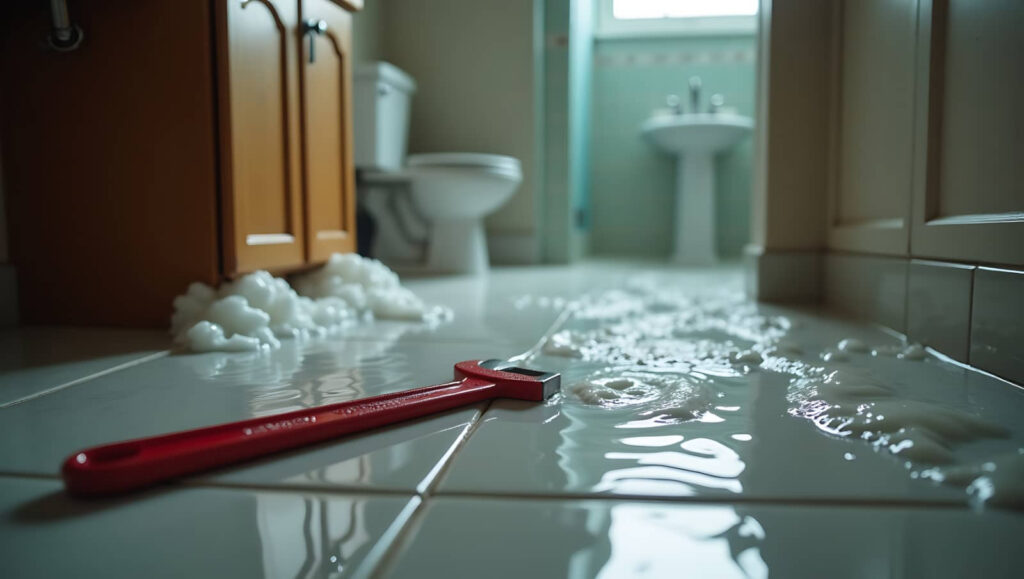
If your toilet overflows, you need to act fast, because not every spill is a simple cleanup. When water reaches the floor, seeps into drywall, or carries a foul odor, the situation can turn into an emergency. You should shut off the supply right away and assess the water source. Clean water and contaminated water require different steps, and the wrong move can spread damage far beyond the bathroom.
Key Takeaways
- Toilet overflow becomes an emergency when contaminated water, sewage, or black water is involved.
- Turn off the toilet’s shut-off valve immediately; use the main water shutoff if the valve is stuck.
- Call for help if water reaches flooring, drywall, or insulation, or if odors linger after cleaning.
- Keep people and pets away, wear gloves and closed shoes, and disinfect all contacted hard surfaces.
- Repeated backups, gurgling drains, or pooling around the toilet base may signal a main-line blockage.
When a Toilet Overflow Is an Emergency
A toilet overflow becomes an emergency when the water is contaminated, reaches flooring or drywall, or leaves a persistent sewage odor. You’re dealing with more than a mess; you’re facing a sanitation and building-material issue that can spread fast.
In these cases, toilet overflow cleanup needs professional attention because porous surfaces can trap moisture, bacteria, and odor. If water has seeped under tile, into subflooring, or behind walls, you may not see the full damage right away.
You belong in a safe, dry space, and acting quickly helps protect it. Call a qualified restoration team when the overflow involves sewage, dark water, soaked materials, or lingering smell.
They’ll assess contamination, remove damaged materials, and dry the area correctly.
Shut Off the Water and Stop the Overflow
First, you should locate the toilet’s shut-off valve, usually behind the bowl near the wall, and turn it clockwise to stop the water supply.
If the valve’s stuck, use the main water shutoff right away so the overflow doesn’t rise further.
Once the flow stops, you can assess the cleanup and determine whether the water has reached flooring, drywall, or other contaminated areas.
Shut Off Valve
Find the shutoff valve quickly and turn it clockwise to stop the toilet from overflowing. You’ll usually find it behind the toilet, low on the wall, attached to a small supply line.
Grip the handle firmly and rotate it until it stops; don’t force it if it resists. If your valve is a lever, move it perpendicular to the pipe.
Once the water is off, you’ve taken the most important first step as a team member in the cleanup process. This control point isolates the fixture, prevents more supply water from entering the bowl, and gives you time to assess the situation.
If the valve won’t close, stop and call for help right away so you’re not handling a bigger mess alone.
Stop Rising Water
With the shutoff valve closed, you can stop the bowl from taking on more water and keep the overflow from spreading.
Stay calm and watch the waterline; if it keeps rising, recheck the valve and confirm it’s fully closed.
Lift the tank lid only if you need to inspect the float or flapper, and don’t flush again.
If water is already on the floor, place towels around the base to contain it and protect nearby surfaces.
You’re handling a common emergency, and quick control matters.
If the water is dirty, smells like sewage, or has reached flooring or drywall, stop cleanup and call a professional.
Fast action limits damage, reduces contamination, and helps your home recover safely with your crew.
Clean vs. Dirty Toilet Water Cleanup
You can usually handle clean toilet water if you dry the area quickly and disinfect all contacted surfaces.
However, even “clean” overflow can create slip and electrical hazards.
Dirty toilet water, sewage odors, or water that reaches flooring, drywall, or insulation raises contamination risk and often needs professional cleanup.
Assess the source, spread, and affected materials before you decide whether to clean it yourself or call for help.
Clean Water Hazards
Clean water from an overflowed toilet can still create a mess, but it usually poses less risk than wastewater from a sewer backup or a toilet that overflowed because of contamination.
You should still act quickly: shut off the supply valve, remove standing water, and dry the area with towels, a wet vacuum, or a fan.
If the water stayed on hard surfaces, you can usually clean and disinfect the floor, baseboards, and affected fixtures yourself.
Wear gloves, avoid splashing, and wash your hands after cleanup.
Watch for hidden moisture under mats, around seams, and near cabinets, because trapped water can damage materials.
If the overflow reaches drywall, insulation, or subflooring, call a professional so your home stays safe and your space feels normal again.
Dirty Water Risks
Dirty toilet water raises the stakes because it can carry bacteria, waste, and other contaminants that spread through surfaces and materials. You’re not just dealing with a mess; you’re managing a sanitation issue that can affect your home’s safety.
Protect yourself and act methodically:
- Keep people and pets out of the area.
- Stop contact with porous items that soak up contamination.
- Clean hard surfaces with proper disinfectant and follow contact times.
If the water touched grout, carpet, baseboards, or other absorbent materials, contamination can linger beyond what you see.
You’ll want to treat every wet surface as potentially unsafe until it’s fully cleaned and dried. You’re doing the right thing by taking dirty water seriously, because quick, careful action helps your space feel safe again.
Cleanup Decision Factors
When deciding how to handle a toilet overflow, the main factor is whether the water stayed clean or picked up waste, urine, or other contaminants.
If it’s only clean water and you catch it fast, you can usually shut off the supply, remove standing water, and disinfect hard surfaces yourself.
If the water touched stool, urine, or sewer backup, treat it as contaminated and call a professional.
You’ll also need help if water reached carpet, pad, drywall, baseboards, or insulation, because moisture can spread hidden damage.
Watch for sewage odors, staining, or recurring wet spots; those signs mean the problem’s bigger than surface cleanup.
You’re not overreacting by asking for help—you’re protecting your home and your people.
Safe cleanup starts with the right call.
What to Do When Water Hits the Floor
If water has spread onto the floor, stop the overflow at once and limit traffic through the area. You’re not alone here; handle it in a steady sequence:
Shut off the toilet supply valve and flush once to drain the tank.
Put on gloves, then use towels or a wet vacuum to remove standing water.
Move dry items away from the spill and place absorbent materials at the edges.
Open a window or run ventilation if you can do so safely.
Keep children and pets out until the surface is dry.
Watch for slippery spots and avoid mopping contaminated water with bare hands.
If the flow returns, the water smells foul, or you can’t control it quickly, call a cleanup professional right away.
Why Wet Drywall and Baseboards Matter
Wet drywall and baseboards matter because they can soak up contaminated water, trap moisture behind the surface, and weaken building materials fast.
You may not see the damage right away, but the material can swell, soften, and lose structural strength within hours.
If water reaches the lower wall area, it can wick upward and spread beyond the visible stain.
That’s why you should remove wet trim, inspect the wall cavity, and dry the area fully.
If you leave it damp, you raise the chance of hidden deterioration and a longer cleanup later.
Acting early helps you protect your home and keep the space safe for everyone who lives there.
Warning Signs of a Sewage Backup
A sewage backup often shows up as foul odors, slow drains, gurgling toilets, or water that rises instead of flushing normally.
You may also notice multiple fixtures acting up at once, which tells you the blockage isn’t isolated. Trust these signals early so you can protect your home and stay ahead of a bigger cleanup.
Watch for:
- Water pooling around the toilet base or nearby floors
- Repeated backups after you flush or run a sink
- Bubbling sounds from drains when other plumbing uses water
If these signs keep returning, don’t wait. You’re not dealing with a routine clog; you’re likely facing a main-line issue that needs prompt attention.
Acting now helps you stay in control and keeps your household on the right track.
Health Risks of Contaminated Toilet Water
Contaminated toilet water can expose you to bacteria, viruses, and other pathogens, especially when overflow involves sewage or backed-up wastewater.
You may encounter E. coli, norovirus, and other germs that can cause gastrointestinal illness, skin irritation, or respiratory discomfort. If water contacts cuts, eyes, or mucous membranes, your risk increases.
You should avoid direct contact, keep children and pets away, and wear gloves and closed shoes during cleanup. Wash hands thoroughly after any exposure.
Porous materials can retain contamination, so the area may stay unsafe until you disinfect it properly. Fast action helps reduce spread and protects everyone in your home.
If you’re handling the mess together, stay cautious, communicate clearly, and support one another while you work through the cleanup safely.
When to Call a Water Damage Pro
Call a water damage pro if the overflow involved sewage, spread beyond the bathroom, or soaked into flooring, drywall, baseboards, or insulation.
You need expert help when moisture hides behind finishes or odors linger after cleaning; that’s where your home needs a skilled team. A pro can inspect, extract, dry, and sanitize with calibrated equipment.
Water reached adjacent rooms or hallways.
You see swelling, staining, or soft materials.
The toilet backed up with waste or black water.
If you’re unsure, trust the signs and act fast. Early response limits structural damage, mold growth, and recurring smell, and it helps you get your space back with confidence.
Frequently Asked Questions
How Long Does Toilet Overflow Cleanup Usually Take?
You’ll usually spend 30 minutes to 2 hours on cleanup, but drying can take 24 to 48 hours. If water soaked flooring or drywall, you’ll need more time and professional help.
Can Bleach Fully Disinfect After an Overflow?
No, bleach can’t fully disinfect after an overflow if contaminated water has soaked flooring, drywall, or subflooring. You’ll need thorough removal, drying, and often professional sanitation to prevent lingering bacteria and odors.
Should I Remove the Toilet Myself After Flooding?
No, you shouldn’t remove it yourself after flooding. If you’ve got a theory that it’s just a loose fixture, test carefully: shut water off, inspect contamination, then call a pro if odors, flooring, or drywall are affected.
Will My Homeowner’s Insurance Cover Overflow Damage?
Usually, your homeowner’s insurance covers sudden overflow damage, but you’ll need to check your policy for exclusions. You can document the damage, call your insurer quickly, and keep receipts for cleanup and repairs.
How Do I Prevent Toilet Overflows in the Future?
You can prevent toilet overflows by flushing only waste and paper, keeping the flapper, float, and vent clear, avoiding clogs, and scheduling regular inspections. If backups recur, you’ll want a plumber to check your system.
Conclusion
When toilet overflow cleanup turns urgent, acting fast protects your home and health. Shut off the water, limit spread, and treat any dirty water as a contamination risk. If water reaches the floor, drywall, or baseboards, don’t wait—hidden damage can start quickly. Isn’t preventing mold, odors, and structural problems worth a prompt response? When you’re unsure, call a water damage professional and get the sanitation and drying process done right.