
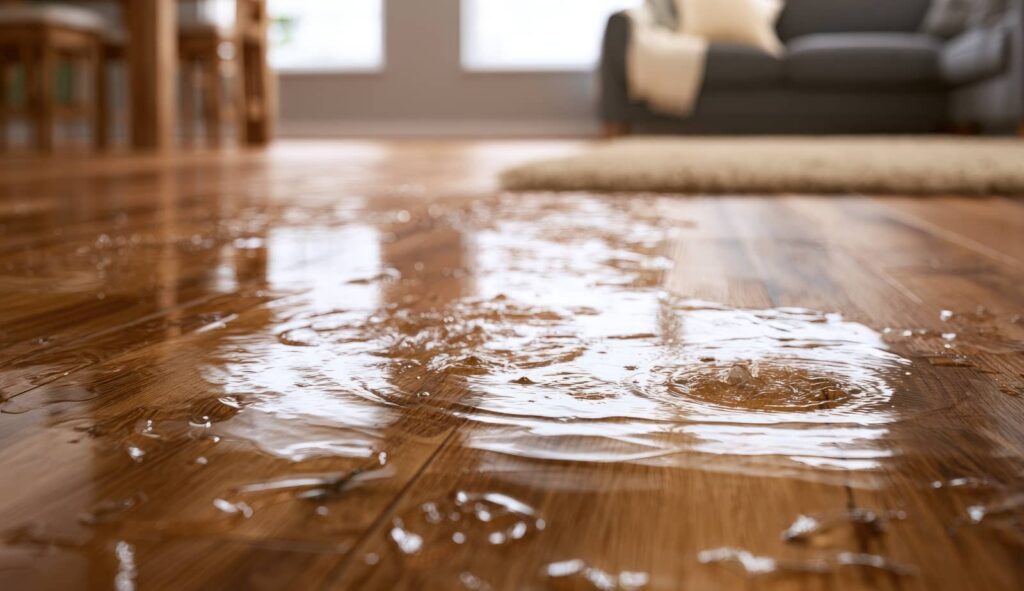
When water damage hits, your first moves can limit the loss. Shut off the water source and power only if it’s safe, then start removing standing water and moving dry items out of the wet area. You should also document every affected room with photos and notes for your insurance claim. The faster you control moisture, the less chance you give hidden damage to spread.
Key Takeaways
- Shut off the water source and, if safe, turn off power at the main breaker.
- Document damage with photos, notes, and a simple inventory before moving items.
- Move dry belongings, electronics, and valuables to a safe dry area.
- Remove standing water, open doors or windows, and use fans or a dehumidifier if weather permits.
- Contact a qualified restoration team quickly, especially for sewage, hidden moisture, or widespread damage.
First Steps After Water Damage
When water damage happens, act fast to limit the spread and reduce long-term damage.
First, document the affected area with photos and notes so you can track losses and support claims. Move dry belongings, paperwork, and electronics away from damp surfaces, and place them in a clean, dry room.
Open interior doors and cabinets to improve airflow if conditions are safe. Use towels or mops to remove standing water from hard floors, but don’t scrub porous materials yet; you may drive moisture deeper.
If you’re asking what to do after water damage, focus on safety, moisture control, and documentation. Set out fans and a dehumidifier if you have them.
Then contact a qualified restoration team to assess hidden moisture, contamination risk, and structural impact.
Shut Off Water and Power Safely
Before you enter water-damaged areas, shut off the water source if you can do so without exposure to standing water or electrical hazards. Then turn off power to the affected zone at the main breaker if the panel is dry and accessible.
If you can’t reach either control safely, wait for trained help. Use rubber-soled shoes, keep your hands dry, and avoid metal tools near wet surfaces.
Confirm that pumps, water heaters, and appliances in the affected area are de-energized only from a safe location. If the leak comes from a fixture, close its local valve.
If you smell gas, hear arcing, or see sparks, leave immediately and call emergency services.
Taking these steps protects your home and keeps your household safer together.
Move Belongings Out of the Wet Area
Once the area is electrically and structurally safe to enter, start moving dry belongings out of the wet zone as quickly as you can. Work methodically so you don’t miss items that matter to your household.
Remove papers, electronics, textiles, and keepsakes first.
Lift furniture legs onto blocks or move pieces to a dry room.
Place damp items in separate piles so you can track them later.
Use gloves and shoes with traction, and keep walkways clear. Carry items with two hands, and don’t stack heavy objects where they can tip.
If you share the space, tell everyone what you’re saving so the whole team stays coordinated. Protecting your belongings now helps preserve what matters and gives you a calmer starting point when restoration begins.
Dry Water Damage Fast
Start drying water damage fast to limit swelling, staining, and mold growth. Open windows if weather helps, then run fans to move air across wet surfaces.
Use a dehumidifier in the closed room so you pull moisture out, not just spread it around. Remove soaked rugs, cushions, and towels, and lay them in a dry space with airflow.
Wipe hard surfaces with clean, absorbent cloths, changing them often. Lift baseboards only if they’re loose, and dry the wall cavity edge you can reach.
Check hidden spots behind furniture, under sinks, and along trim. Keep children and pets away from damp flooring so you can work safely.
If materials stay wet after a short, focused drying effort, call a restoration team so your home stays healthy together.
Take Photos for Your Insurance Claim
Take clear photos of every damaged area before you move or clean anything, so you create a reliable record for your claim.
You should also photograph each affected item from multiple angles, including close-ups of serial numbers, labels, and visible damage.
Keep the images organized with timestamps and room locations so your insurer can verify the full extent of the loss.
Capture Damaged Areas
Before you move or discard anything, document the damage thoroughly with clear photos and short videos. Capture wide shots first, then close-ups that show water lines, stains, warped materials, and active leaks.
Keep your phone steady and include a familiar object for scale when useful. If you can, record each room from the doorway and pan slowly across affected surfaces. Your goal is to create a time-stamped record that supports your claim and helps your restoration team understand the scope.
- Photograph every damaged wall, floor, ceiling, and baseboard.
- Record any standing water, dripping points, or soaked materials.
- Save images in one folder and back them up immediately.
You’re not overdoing it; you’re protecting your home and helping your claim move forward confidently.
Document Belongings Clearly
Document each damaged belonging with clear, dated photos so you can support your insurance claim and track losses accurately. Photograph each item from multiple angles, then add close-ups of labels, serial numbers, and water lines.
Include furniture, electronics, clothing, documents, and storage bins, even if some items still look usable. Keep one shot showing each item in the room so you can prove location and context.
If you can safely do so, record brief video while naming the item and noting visible damage. Save original files; don’t edit, crop, or filter them. Back everything up to cloud storage and a second device.
Create a simple inventory with item name, estimated age, purchase price, and condition. Clear records help your adjuster verify loss and support your claim.
Look for Mold and Hidden Moisture
Check concealed areas such as behind baseboards, under flooring, inside wall cavities, and around insulation for hidden moisture spots.
Use a moisture meter if you have one, since damp materials can stay wet after the surface looks dry.
Watch for mold growth signs like discoloration, musty odor, or visible colonies, and act quickly if you find them.
Hidden Moisture Spots
Water often hides in places you can’t see, so inspect behind baseboards, under flooring, inside cabinets, and around wall cavities for dampness or mold growth. Use a flashlight and moisture meter to check dark seams, joints, and trim where water can linger.
Lift small sections of carpet or padding to feel for cool, wet spots.
Remove accessible cabinet toe kicks and look for staining or soft backing.
Probe attic, crawlspace, and closet corners for hidden seepage.
If you find damp materials, mark the area, limit airflow with fans only if safe, and keep family members away from the wet zone.
You’re not handling this alone; careful inspection helps your restoration team target drying fast and reduce structural damage before it spreads.
Mold Growth Signs
If moisture has lingered, look for mold growth right away, especially along drywall seams, baseboards, insulation, and inside closets, cabinets, and crawlspaces.
You may see discoloration, fuzzy patches, or dark spotting, but don’t rely on sight alone. Smell for a musty odor, check for peeling paint, swelling wood, and damp drywall, and press gently to find soft areas.
Use a flashlight to inspect behind furniture, under sinks, and around HVAC returns where hidden moisture often stays.
If you notice condensation, recurring dampness, or visible growth, limit contact and keep the area dry. Bag affected textiles, avoid running fans through contaminated spaces, and document what you find.
That gives your restoration team better information and helps your household respond with confidence.
Common Water Damage Mistakes
One of the most common mistakes after water damage is waiting too long to act, because moisture spreads quickly and can lead to structural deterioration, mold growth, and electrical hazards.
You also shouldn’t walk through standing water without checking for hidden risks, or push soaked furniture against walls, which traps moisture and stains finishes.
Avoid these errors:
- Using a household vacuum on water, which can damage equipment and increase shock risk.
- Closing up damp rooms, which slows drying and encourages odor and microbial growth.
- Lifting wet materials without support, which can tear flooring and weaken substrates.
You’re not dealing with this alone.
Stay organized, document damage, and limit movement in affected areas. Fast, controlled action protects your space and helps your household stay safer until repairs begin.
When to Call Water Damage Restoration
Call a water damage restoration professional as soon as you see signs of widespread saturation, hidden moisture, sewage contamination, or damage affecting drywall, insulation, flooring, or electrical systems.
You should also call if the source is unknown, the water has soaked for more than 24 hours, or the area smells musty. These conditions raise the risk of structural decay and microbial growth, and they often need specialized drying equipment, moisture mapping, and sanitation.
If you feel unsure, trust your instincts and reach out early; you’re not overreacting. A quick response helps your home’s recovery and keeps your household in the loop.
Professional restoration teams can assess the extent of loss, document damage, and coordinate the next steps so you can move forward with confidence.
Protect Your Home Before Help Arrives
Before help arrives, you can limit further damage by making the area safer and easier to dry. First, shut off electricity to wet rooms if you can reach the breaker safely. Next, stop the water source at the main valve or fixture shutoff. Then, move rugs, furniture, and electronics to a dry area so moisture doesn’t spread.
Open windows and interior doors to improve airflow.
Blot standing water with towels, mops, or a wet vacuum.
Place aluminum foil or wood blocks under furniture legs.
Remove small valuables, but leave contaminated debris for professionals. If ceilings sag, don’t enter the room.
You’re protecting your home and joining the many homeowners who act fast, stay calm, and reduce repair costs.
Frequently Asked Questions
Can I Stay in My Home After Water Damage?
You can stay if the water is clean, the structure’s sound, and utilities are safe; otherwise, leave. Avoid rooms with standing water, mold, or electrical hazards, and call restoration professionals quickly for assessment.
What if the Water Smells Bad or Sewage-Like?
If it smells sewage-like, you’re dealing with contamination; don’t touch it or walk through it. You should isolate the area, shut off HVAC, and call restoration pros immediately—think “bad news travels fast,” so act now.
Should I Throw Away Soaked Carpet and Drywall?
Yes, you should usually remove soaked carpet and drywall if sewage, mold, or long saturation’s involved. You’ll reduce contamination and hidden damage. If it’s clean water and recent, dry it fast; otherwise, discard it.
How Long Does It Take for Damage to Spread?
Time flies—damage can spread in minutes. You’ll see wicking, swelling, and mold risk within 24–48 hours. Dry affected areas fast, remove standing water, and call a restoration pro if you can’t control moisture.
What Documents Should I Save for My Insurer?
Save your policy, photos, videos, repair estimates, receipts, hotel bills, and any communication with your insurer. You’ll prove losses faster, support your claim, and help your adjuster process everything accurately.
Summary
Act fast to limit damage before help arrives. Shut off the water and power if it’s safe, move dry items out of the wet area, and start drying surfaces right away. Take clear photos for your insurance claim and check for hidden moisture or mold. Avoid common mistakes like delaying cleanup or using unsafe equipment. These first actions can be the firewall that keeps a bad situation from getting worse.